
Apple's first foldable iPhone, the iPhone Duo, opens pre-orders on October 16. It is not just another phone model for the accessories trade: it has two displays with two very different protection problems. The outer 5.4-inch Super Retina XDR display can take a conventional tempered glass protector, while the 7.6-inch folding Super Retina XDR display needs a flexible film approach. For accessory brands, distributors and importers, this is a new screen-protector category rather than a simple tooling refresh.
One Phone, Two Very Different Screens
Apple describes iPhone Duo as the first foldable iPhone with a dual-display system. When open, it has the largest iPhone display ever, 50 percent larger than the iPhone 18 Pro Max. The two displays carry different Apple cover treatments:
- Outer display: 5.4-inch Super Retina XDR, with Ceramic Shield 2 on the front. This is the display users touch when the phone is closed, and it behaves like a conventional smartphone cover glass for protection purposes.
- Folding display: 7.6-inch Super Retina XDR. Apple states that the inner display has a scratch-resistant coating and is made of more than 10 ultrathin layers with a custom nano-texture finish that reduces glare.
That difference matters for sourcing. Rigid tempered glass is a reasonable choice for the outer display, but the folding display needs a flexible, thin film that can survive the hinge and repeated folding without lifting at the crease.
Sourcing for the Outer Display
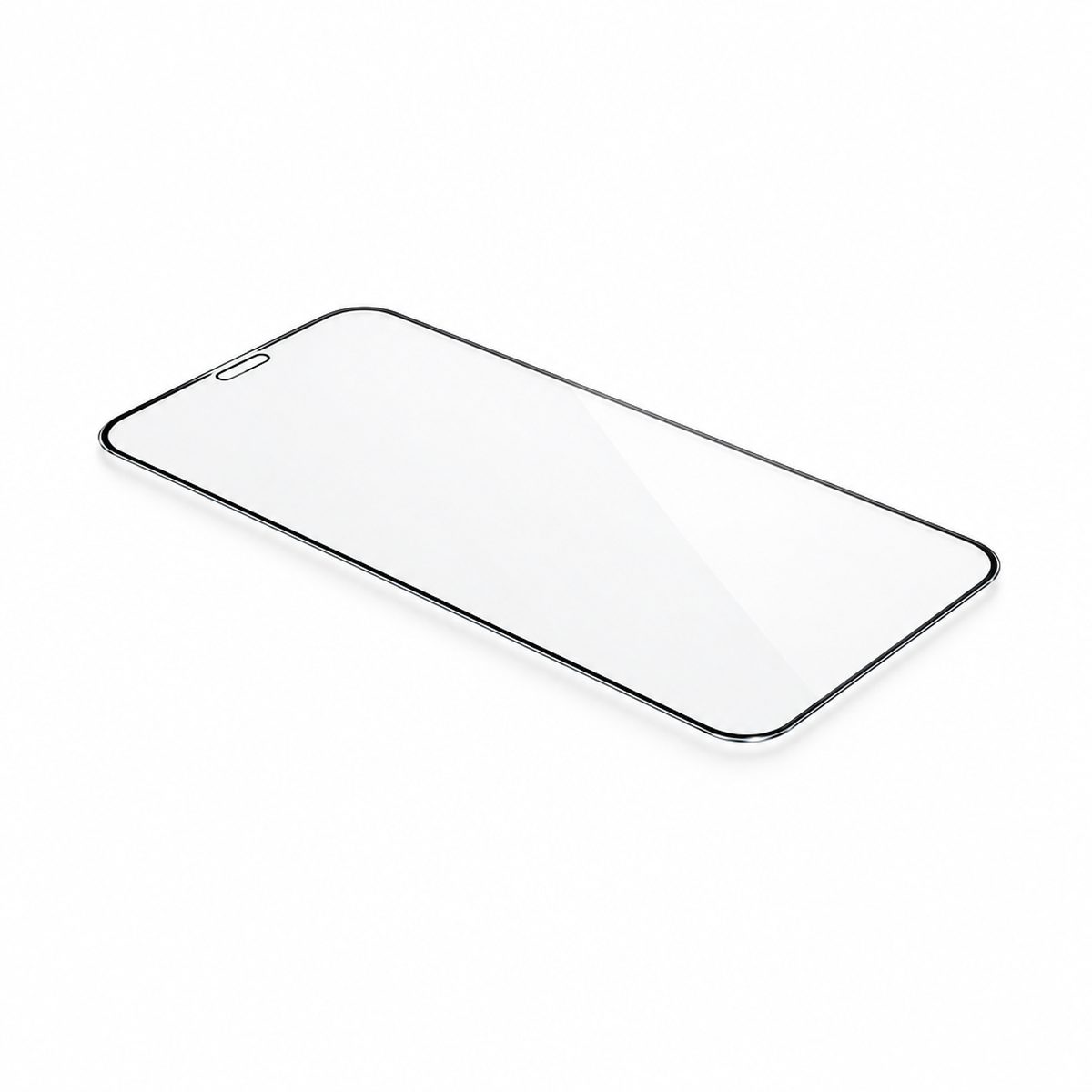
The outer display is the simpler part of the program. Buyers can apply the same specification discipline used for standard tempered glass films:
- Confirm the glass thickness: 0.2 mm, 0.33 mm and 0.4 mm are common substrate options, with 0.33 mm the most widely used. Thinner glass may be preferred for cases with tight tolerances.
- Specify the edge treatment: a 2.5D or 3D polished arc, the black-border width, and the camera cutout alignment. The iPhone Duo's 48MP Dual Fusion camera means the cutout position must be checked against a real outline, not guessed.
- Choose the surface treatment: oleophobic coating, AR anti-reflective coating, or matte AG finish, depending on the retail positioning.
- Check case clearance: foldable cases wrap the device differently, so edge-to-edge glass can conflict with thicker bumpers. Ask the supplier for a case-compatibility note.
For a foldable outer screen, the construction matters more than the marketing name. Our Huawei Mate X6 outer-screen 3D full-adhesive glass is an example of a model-specific, full-surface bonded film; the 3D curved full-glue range covers other curved-screen programs.
The tempered glass category on our site lists the standard options buyers should compare: /product-category/mobile-screen-protectors/tempered-glass/.
Sourcing for the Folding Display
The 7.6-inch folding display is the part where many sourcing mistakes happen. Because the panel flexes at the center, a rigid glass sheet can crack along the hinge or lift at the edges. The realistic aftermarket protection here is a flexible film: hydrogel, TPU, or a thin polymer film designed to follow the fold.
Before ordering, require these checks in writing:
- Fold-cycle durability: ask how many folding cycles the film is tested to and whether that claim is supported by a test record.
- Crease behavior: the film should stay adhered through the crease without bubbles, whitening, or edge lifting after repeated folding.
- Nano-texture compatibility: the inner display has a glare-reducing nano-texture finish. A film with the wrong clarity or adhesive can soften that finish visually or leave residue.
- Touch sensitivity: confirm the film does not noticeably change touch or Apple Pencil-style input where supported.
- Application method: foldable films are harder to install than flat glass. Retail kits should include alignment tools and a bubble-free wet or dry application process.
Specification Checklist: Outer vs. Folding Display
| Item | Outer 5.4-inch display | Inner 7.6-inch folding display |
|---|---|---|
| Apple cover treatment | Ceramic Shield 2 front | Scratch-resistant coating, nano-texture |
| Protection type | Tempered glass | Flexible film (hydrogel/TPU/thin polymer) |
| Thickness to confirm | 0.2 / 0.33 / 0.4 mm glass | Film thickness and adhesive stack |
| Key risk | Camera cutout and case fit | Hinge stress, crease lifting |
| Test before bulk | Outline fit, edge feel | Fold cycles, crease adhesion |
This table is the short form of a broader supplier checklist. A fuller five-question factory-versus-trader screen is in our supplier selection guide: /how-to-choose-screen-protector-supplier-china/.
How to Verify a Supplier
A new foldable model means new tooling and new testing, so qualification should be more specific than "send a sample":
- Ask how long a new iPhone Duo tooling program takes from drawing to first sample.
- Request the fold-test record for the inner film, not only a photo of the film.
- Confirm whether the tooling and testing costs are one-off or amortised into the unit price.
- Require third-party inspection before shipment if the order is for retail packaging.
- Put the approved sample, film stack, MOQ, packaging and staged lead time into the purchase order.
Traders can still be useful for small orders, but they should be priced and managed as intermediaries rather than as factories.
How kmore Optical Fits
kmore Optical is the factory brand of Dongguan Kmore Optical Technology Co., Ltd. We produce tempered glass films, 3D curved films, AR and matte films, anti-blue-light films and privacy films for phone, tablet, laptop and camera applications. For a foldable program, buyers typically combine a rigid outer-display glass with a flexible inner film, which is why we ask for the model list and target quantity before quoting rather than giving a single conversation number.
Sampling usually takes 3–5 days and mass production 7–15 days, depending on model and process. Regular models support small trial orders, and bulk MOQ is confirmed by product type and packaging in writing. Start with the checklist above, then send us your requirements through the /contact/ page or review our /solutions/ customization process first.
FAQ
Does the iPhone Duo inner display need a screen protector?
The inner display already has a scratch-resistant coating, but it is still a flexible display that folds. Retail buyers often add a thin flexible film for extra scratch and scuff protection, especially for resale and demo units.
Can I put tempered glass on a foldable inner display?
It is not recommended. The inner 7.6-inch display flexes at the hinge, so rigid glass can crack along the fold or lift at the edges. Use a flexible film for the inner display and reserve tempered glass for the 5.4-inch outer display.
What size is the iPhone Duo outer display?
The outer display is 5.4 inches, and the folding inner display is 7.6 inches, according to Apple's published specifications.
How should buyers test a foldable screen film before a bulk order?
Check fold-cycle durability, crease adhesion after repeated folding, nano-texture clarity, touch sensitivity, and the retail application kit. Require a written test record rather than only a sample photo.
When does iPhone Duo pre-order start?
Apple states that iPhone Duo pre-orders begin on October 16. Orders aimed at launch retail should be planned backwards from that date for tooling, sampling and freight.
Further reading: the 12 fields to confirm before ordering tempered glass.
New products for the iPhone Duo inner display