Sourcing screen protectors from China comes down to four questions: can the supplier actually make what you specified, can they repeat it batch after batch, can they tool up for new phone models, and can they document what they ship. Price matters, but it is the last question rather than the first. This guide is written for buyers at phone accessory brands, distributors, importers and retail chains who need to qualify a supplier without flying to Guangdong first.
Start With the Product Definition, Not the Quotation
A supplier cannot quote accurately against “tempered glass, good quality”. Buyers who get wildly different prices usually gave a vague brief. Define these points before you request pricing:
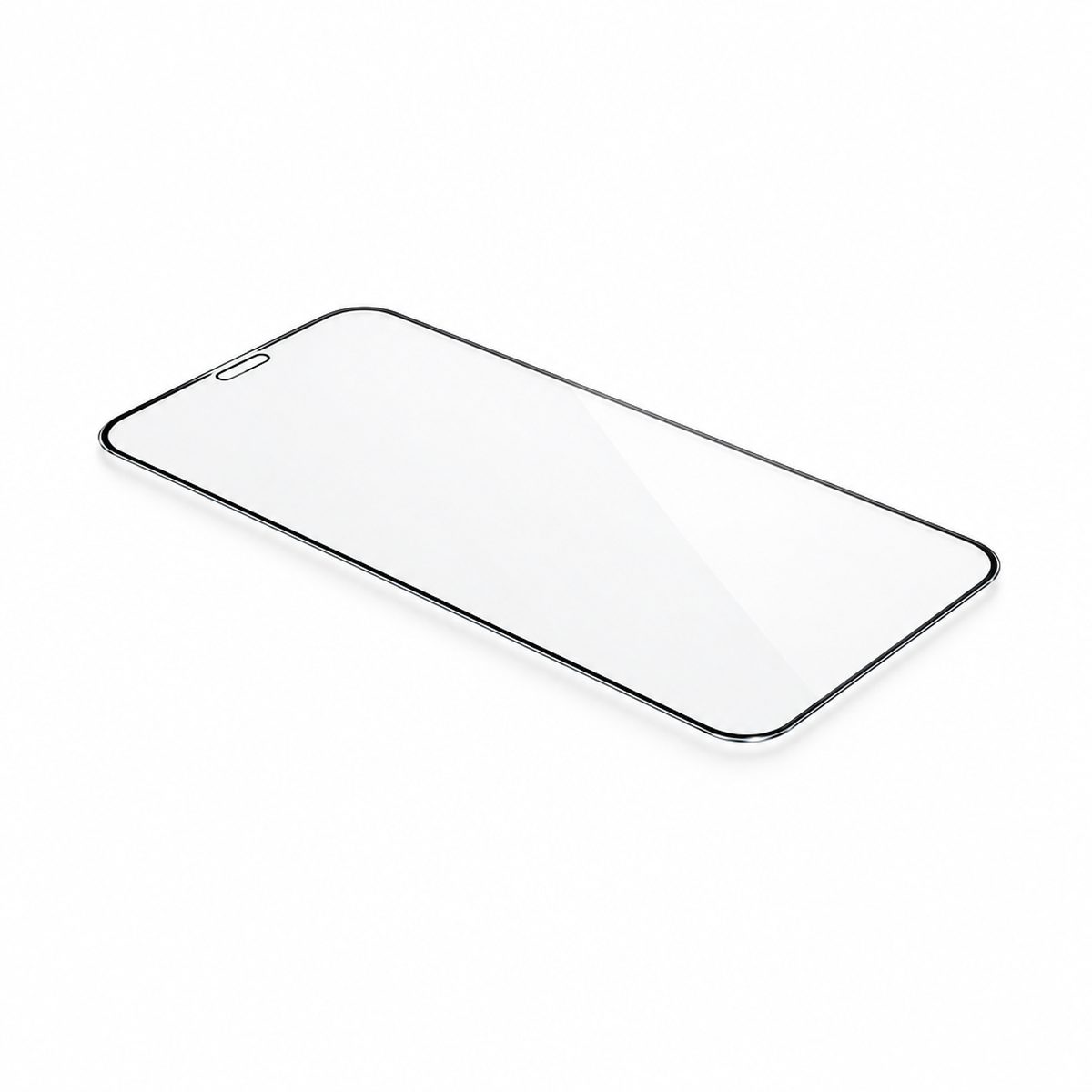
- Material and construction: tempered glass, hydrogel/TPU film, or privacy film with a micro-louver structure — three different production lines. The glass substrate itself is also graded: high-alumina, medium-alumina and soda-lime. The bonding adhesive comes in clear, blue-light and privacy variants. So “tempered glass” on its own is not a specification. Ask which substrate grade and which adhesive are being quoted — films sold under the same name can differ by a full tier in clarity, edge strength and price.
- Thickness: confirm which thickness is being quoted — the glass substrate on its own, or the finished film including the adhesive layer. The two figures differ, and mixing them up is a common reason quotations do not line up. Glass substrates commonly come in 0.2 mm, 0.33 mm and 0.4 mm, with 0.33 mm the most widely used; adhesive layers run from about 0.08 mm to 0.38 mm. Two rules of thumb: on phones with in-display fingerprint readers, glass or adhesive that is too thick can interfere with unlocking, which is why 0.2 mm glass is often specified instead; on displays with a slight curve, adhesive that is too thin tends to leave white edges, which is why thicker adhesive options exist. Different models and different quality targets need different combinations — write the millimetre figures onto the purchase order.
- Adhesive coverage (curved-screen films only): full-adhesive (the whole surface is bonded) versus edge-only adhesive. This question only arises on hot-bent tempered glass made for curved-screen phones. Around a curved edge, full-surface bonding is what keeps the film seated and prevents rainbow banding and lifting; edge-only adhesive is the lower-cost compromise used on some models. Flat-screen phones do not face this choice.
- Edge work: the size of the CNC-polished arc, how long the edge is polished, and the width of the silk-screened black border. The 2.5D arc affects how the edge feels and how it blends into the frame; border width changes how the film looks on a phone with narrow bezels.
- Surface treatment: oleophobic coating (vacuum electroplated), anti-reflective (AR) coating, matte (AG) finish, anti-blue-light filtering.
- Packaging: retail box, blister, or bulk. Packaging is often a separate cost line.
Once this list is written down, every supplier is quoting the same thing and the comparison becomes meaningful.
The Five Checks That Separate Factories From Traders
Most sourcing mistakes come from buying from a trading company that presented itself as a factory. You cannot always tell from a website, but you can tell from the answers to five questions.
- Which processes run in your own workshop? For screen protectors the chain is cutting, CNC shaping, edge polishing, cleaning, silk-screen printing, tempering/coating, lamination and packing. Ask which of these happen on site and which are outsourced. A factory should be able to describe the sequence and show it.
- What is your tooling process for a new model? New phones mean new dimensions and new moulds. Ask how long a new model takes from drawing to a first sample, and whether the tooling cost is one-off or amortised into the unit price.
- How does your quality control work per batch? Ask what is measured, how often, and what records exist. Reasonable answers include surface hardness spot checks, light transmittance, privacy-angle verification for privacy films, and lamination yield. “We check everything” is not an answer; a named test with a frequency is.
- What documentation can you provide? Typical items buyers ask for are batch test records, pre-shipment inspection photos or video, packaging artwork proofs, and the option of third-party inspection before shipment. If your market requires specific test reports, raise it early instead of at shipment.
- How do you handle a defective batch? Ask for the written procedure, the claim window, and whether replacement or credit is standard. Suppliers who hesitate here usually hesitate later, when it costs you.
Order a Sample and Inspect It Against a Checklist
Samples are cheap compared to a wrong container. Ask for production samples rather than hand-made display pieces, and check them against a written list:
- Edges are smooth and free of chips; the film does not feel sharp
- The film matches the device outline, including camera cutouts and curved edges
- Adhesive covers the intended area and applies without trapped bubbles
- Clarity is even across the surface, with no visible tint or haze
- The oleophobic coating repels fingerprints for a reasonable number of wipes
- For privacy film, the screen is clear from the front and blocks side viewing from the angles you need
- The retail packaging protects the film in transit and matches the artwork you approved
Keep the sample. It becomes the reference for the bulk order, and it is the fastest way to settle a dispute later.
How to Read a Quotation Properly
A useful quotation is itemised. If you only receive one lump sum, ask for the breakdown:
- Film cost per piece, by model
- Silk-screen printing or logo printing cost
- Packaging cost, and whether the packaging tooling is one-off
- Mould/tooling cost for a new model
- Sampling fee, and whether it is credited against the bulk order
- MOQ per model and per packaging type
- Lead time split into sampling, production and packing
- Shipping terms (EXW, FOB, or door-to-door) and who handles export documents
- Payment terms and the currency
Two suppliers quoting the same unit price can differ substantially once tooling, packaging and minimums are included.
Red Flags Worth Taking Seriously
- MOQ is described as “negotiable” but never stated in writing
- The supplier refuses to send a production sample before a deposit
- They cannot describe their own production process in sequence
- They will not allow third-party inspection, or add heavy conditions to it
- Test records cannot be produced, only referenced
- The quotation has no breakdown, and every question changes the price
- They accept any specification without asking a question — a real factory pushes back when a request is impractical
Plan the Timeline Around Production and Holidays
Two timelines matter: how long the supplier needs, and when your market needs stock. Factory-side, sampling and mass production are separate stages; asking for both in one number hides the risk. On the market side, plan backwards from your selling season. Chinese New Year is the largest scheduled stoppage in the calendar and affects both production and freight, so orders aimed at Q1 retail should be placed well before the holiday period rather than during it. A practical note on how that works in practice is in our article on planning screen protector orders around Chinese New Year (/spring-festival-2027-screen-protector-lead-time/).
How kmore Optical Works
kmore Optical is the factory brand of Dongguan Kmore Optical Technology Co., Ltd., founded in February 2015 in Tangxia Town, Dongguan, Guangdong, China. The plant covers about 1,000 m² with a team of 20+, producing roughly 1,000,000 pieces per month. Cutting, CNC shaping, edge polishing, cleaning, silk-screen printing and packing run in our own workshop, and every batch is inspected before packing: surface hardness, light transmittance, privacy angles and lamination yield are checked, and full inspection is done before packing. Third-party inspection such as SGS, TÜV or Intertek is welcome at the factory.
We supply tempered glass films, 360° privacy films, AR anti-reflective films, matte films, 3D curved films, anti-blue-light films, plus tablet, laptop, camera lens and action camera protectors, mainly for accessory brands, distributors, importers and retail chains. Sampling typically takes 3–5 days and mass production 7–15 days, depending on model and process. Regular models support small trial orders, and bulk MOQ is confirmed by product type and packaging — we quote it in writing rather than in conversation.
If you are comparing suppliers now, start with the checklist above, then send us your model list and target quantity through the /contact/ page, or review our /solutions/ customization process first. Our tempered glass range is listed under /product-category/mobile-screen-protectors/tempered-glass/.
FAQ
What is a typical MOQ for screen protectors from a Chinese factory? MOQ depends on the model, the film type and the packaging. Many suppliers accept small trial orders for regular models and set a higher minimum for custom printing or custom packaging. Ask for the MOQ per model in writing, and check whether it changes once your logo is printed on the film or the box.
How long does sampling take? For a model the factory already produces, samples are usually quick. For a new model, the process includes tooling and a first article, so plan additional time. kmore Optical quotes 3–5 days for sampling and 7–15 days for mass production, depending on model and process.
How do I check whether a supplier is a factory or a trading company? Ask which production steps happen in their own workshop, request photos or a video call from the production floor, ask which processes are outsourced, and require third-party inspection before shipment. Trading companies can be useful, but they should be priced and managed as intermediaries, not as factories.
What should I confirm before a bulk order? Confirm the approved sample, the written specification (thickness, adhesive coverage, edge treatment, coating), the printed artwork proof, the MOQ, the packaging, the inspection method, the lead time by stage, and the shipping terms. Put all of it in the purchase order, not in chat messages.
—
*All figures in this article are the published specifications of the referenced suppliers or general industry norms; verify current parameters with the supplier before ordering.*