
The OPPO Pad Air6 is a 12.1-inch tablet with a 7:5 LCD, a 2800 × 1980 resolution and a refresh rate that can reach 120 Hz. For a screen-protector buyer, those numbers are only the starting point. The finished SKU also has to match the retail unit's visible glass area, corner geometry, camera clearance, edge clearance and packing requirements. A catalogue line described only as “12.1-inch tablet protector” is not enough to release production.
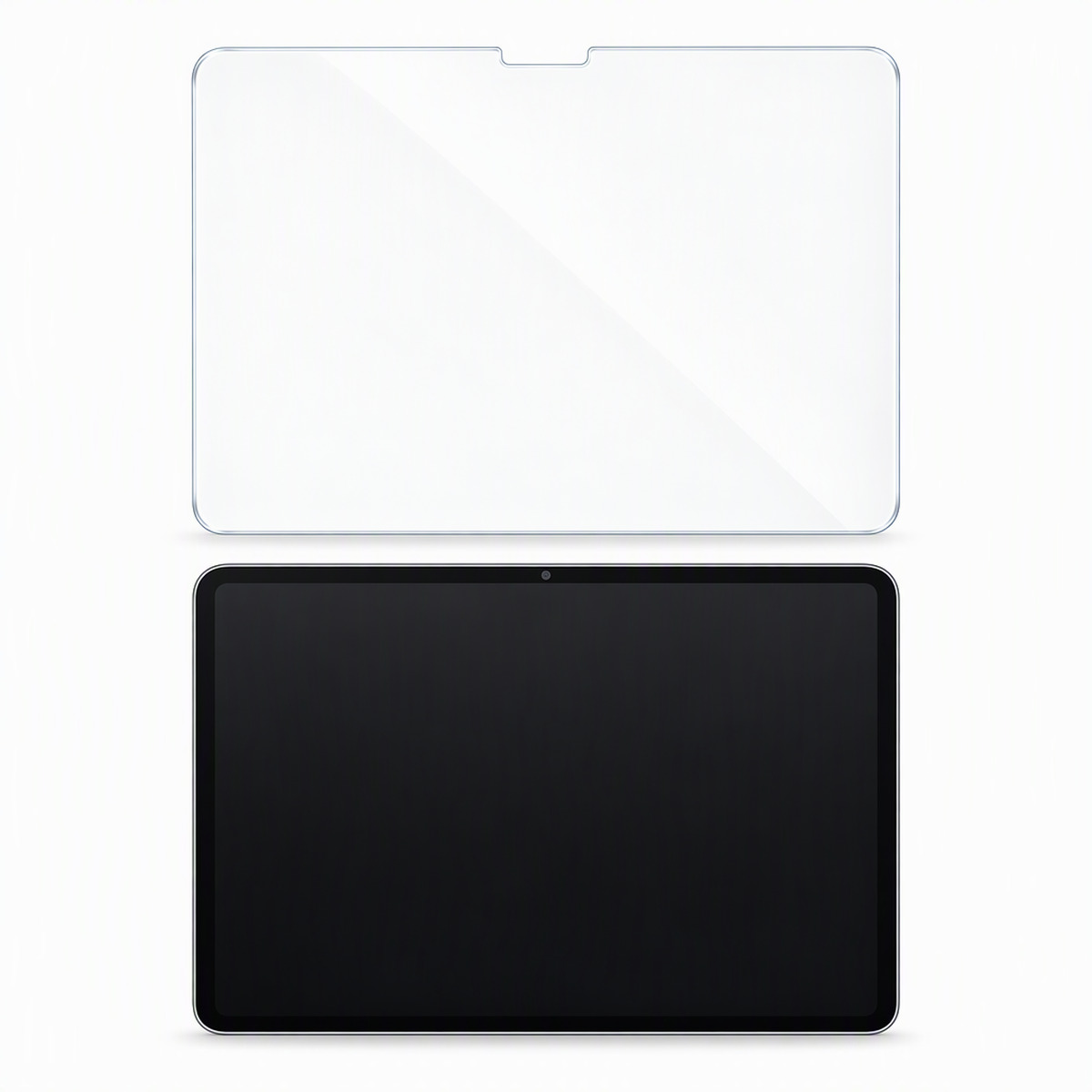
What the official OPPO listing establishes
OPPO's official store lists the Pad Air6 with a 12.1-inch LCD, 7:5 aspect ratio, 2800 × 1980-pixel resolution, 88.5% screen-to-body ratio and 30/60/90/120 Hz refresh-rate modes. The same product page lists body dimensions of 266.01 × 192.77 × 6.89 mm and a weight of about 603 g. It also distinguishes Wi-Fi and SIM-card hardware versions under separate regulatory model numbers.
Those details matter commercially. Body dimensions are not the same as the protector's cut dimensions, and the 7:5 display ratio cannot be replaced by simply stretching a 16:10 film template. The Wi-Fi and cellular variants may also need separate channel records even if the front glass is identical. Confirm that point from the retail unit rather than assuming it.
GSMArena reported the Pad Air6 announcement on 9 November 2026 and noted that the product may become the “OPPO Pad 6” in some global markets. Treat the two names as related search terms, not automatically as interchangeable SKUs. The market name, model number, barcode and retail pack must be confirmed separately before artwork is approved.
Why a 12.1-inch tablet still needs model-specific tooling
A tablet outline is a tolerance assembly, not just a rectangle. Four dimensions can change the fit even when two devices share the same diagonal:
- Visible display shape. The 7:5 ratio produces a different width-to-height relationship from common 16:10 or 4:3 tablets. A same-diagonal master cannot be scaled without checking the entire perimeter.
- Corner radius and bezel width. The film must cover the usable glass without lifting at the edge or exposing a distracting air line.
- Camera and sensor clearance. The front camera, light sensor and any black-mask window need to be located from the retail unit or an approved drawing.
- Case clearance. A fitted folio or bumper can push against the glass perimeter. The protector's outer tolerance must be checked with the intended accessory, not only on a bare desk sample.
The article should not guess a 2.5D edge, glass thickness or hardness from the tablet specification. Those values belong to the protector construction and must be supported by the supplier's approved sample and test record.
Select the film type before comparing quotations
“Tablet screen protector” can describe several products with different user experiences. A clear HD tempered-glass film is the straightforward protection option when colour and transparency are priorities. An anti-glare or matte surface changes reflection and feel but can also soften fine detail, so it needs an installed-sample comparison. Anti-blue-light constructions require an explicit transmission claim and test range; the label alone is not a specification. Privacy film controls side viewing and should be specified separately rather than described as another form of blue-light filtering.
For B2B purchasing, the practical decision is:
| Product direction | Suitable when | What to approve |
|---|---|---|
| Clear HD tempered glass | Retail buyers want an unobtrusive protective layer | Edge fit, clarity, cutouts and packing |
| Anti-glare / matte film | The end user works under strong direct light or dislikes glossy reflections | Haze, glare, text softness and surface feel |
| Anti-blue-light film | The product brief includes a measurable blue-light objective | Test band, blocking result, VLT and colour shift |
| Privacy film | Side visibility is a required product feature | Viewing angle, front clarity and brightness loss |
Do not ask one sample to prove all four claims. Pick the commercial priority first, then approve the film construction that serves it.
Put these fields in the OPPO Pad Air6 specification
A usable purchase specification should travel with the quotation, sample and final inspection sheet. For this tablet project, include:
- exact retail name and market region;
- Wi-Fi or SIM-card version if the listings differ;
- physical unit photo with the display powered on and a scale visible;
- display outline, corner radii and overall size with tolerances;
- front-camera, sensor and black-border geometry where applicable;
- glass or film construction, total stack and adhesive type;
- surface finish, hardness test method and any optical claim;
- installation format, cleaning parts and applicator if supplied;
- pack count, barcode, carton quantity and market labels;
- approved golden-sample date.
Our screen protector specification sheet provides a broader field list that can be used as the starting document.
Approve a sample on the real tablet
A sample should be tested on an actual Pad Air6 or Pad 6 retail unit. Use the same test sequence for every candidate:
- Clean the display and apply the sample under the intended installation process.
- Confirm that the outer edge follows the glass without clipping the display or lifting on a case.
- Inspect the camera and sensor openings under bright light.
- Type, swipe, pinch and drag across the full display area.
- Compare reflection, colour, contrast and text sharpness at the same brightness.
- Check edge dust, bubbles, adhesive marks and removal residue after a controlled lift-and-reapply test.
- Photograph the installed sample and retain it as the production reference.
Touch response and optical quality are especially important because the display supports up to 120 Hz and a high touch-sampling rate. A sample that looks acceptable in a still photo can still feel wrong during scrolling or drawing. Record the actual test condition, device software version and surface finish.
Control mixed-model orders and retail packaging
Tablet buyers often combine several models in one purchase order. That can be efficient at the carton level, but every model still needs its own cut file, sample approval and SKU label. For an OPPO Pad Air6 and Pad 6 mixed programme, create separate rows for the two market names until the supply chain confirms that they share exactly the same retail glass.
Packaging should identify the market before it reaches the warehouse. Confirm the language used on the retail card and warning label, whether the pack is a single protector or a multi-pack, where the model number is printed, and how the barcode differs between variants. A mixed carton should carry an external packing list so the receiving team does not have to open every inner box.
For tablet ranges, the tablet screen-protector sourcing guide explains how to build a model matrix and keep tooling, sample and pack approval aligned.
Plan the first stock position
The OPPO listing states a November 2026 market launch, while media coverage points to the first sales window later in the month. That is a planning signal, not a guarantee of stock availability or transport time. The buyer should keep the new model separate from a previously approved OPPO tablet SKU until the fit sample is signed.
A useful launch plan contains four decisions:
- Produce a small fit sample before committing the full order.
- Approve one clear and one differentiated surface direction only if there is enough retail demand.
- Assign a separate SKU and barcode to each retail model name.
- Leave capacity for a second artwork or fit revision after the first retail units are measured.
This approach prevents a common failure in fast tablet launches: the accessory is ordered from a scaled drawing, but the retail unit arrives with a different camera position or edge geometry.
Next step
For a new tablet programme, send the exact retail model, market name, quantity by model, preferred surface and packaging format. kmore Optical can then define the cut, sample and inspection documents needed for a controlled quotation. Product selection can begin from the iPad HD clear tempered glass reference, while the Pad Air6 cut itself still needs separate confirmation.
For model-specific samples or an RFQ, use the kmore contact page.
FAQ
Is the OPPO Pad Air6 the same product as the OPPO Pad 6?
GSMArena describes the global name as a likely future Pad 6, but a buyer should not assume identical retail packaging, model codes or glass geometry. Confirm the local listing and physical unit before combining the SKUs.
Can a supplier scale an existing 12.1-inch tablet protector to fit?
Only after checking the 7:5 display ratio, corner radii, camera clearance and edge tolerance. A diagonal measurement alone is not a fit specification.
Should the first order include anti-blue-light or privacy film?
Only if the retail product brief specifically needs that function. Clear HD, anti-glare, anti-blue-light and privacy film create different optical results and should be tested as separate samples.
What should be approved before bulk packing?
Approve the installed sample, cut drawing, surface finish, product label, model/barcode mapping, pack contents and carton mark. Keep one signed golden sample with each party.