
Apple announced the new iPad mini on 26 October 2026 with a larger 8.5-inch OLED display, an optional nano-texture finish, a thinner and lighter body, and the A20 Pro chip. For accessory buyers, the launch is not a cosmetic refresh: a new panel size and a new surface option mean the previous generation’s films no longer fit, and the tooling window is open now.
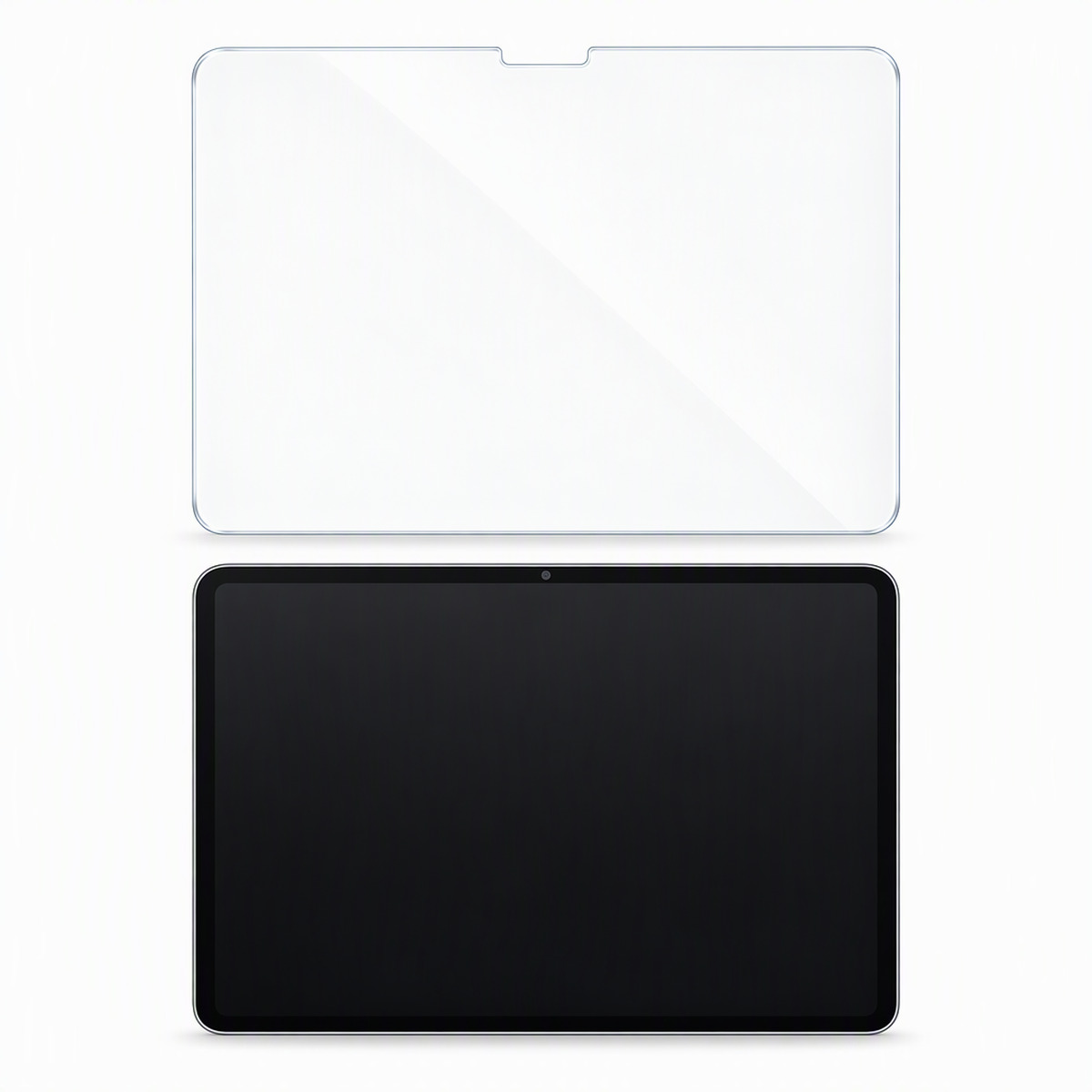
The first shipments of any new tablet decide who holds the shelf for the next twelve months. This guide covers what changed, which film types fit the new panel, and how to plan tooling, MOQ and inspection so the first batch arrives before the demand peak.
What Apple changed on the 2026 iPad mini
According to Apple’s newsroom announcement, the 2026 iPad mini moves to an 8.5-inch OLED display, offered with an optional nano-texture glass finish. The body is thinner and lighter than the previous generation, the chip is the A20 Pro, and the device gains water and dust resistance.
For a screen protector, three of those matter:
- Panel size: a larger display means a new outline. Films cut for the previous mini will not cover the new glass.
- OLED stack: OLED modules are thinner, so edge geometry and adhesive choice matter more than on the older LCD model.
- Nano-texture option: an etched, low-glare surface changes how an added film behaves under light. A matte film on top of nano-texture can double the diffusion and soften the image.
Which film type fits which buyer
| Film type | Best for | Watch-outs on the new mini |
|---|---|---|
| Clear tempered glass | Retail and general protection | Check edge fit on the thinner body; confirm the cutout matches the new camera position |
| Anti-reflective (AR) | Buyers who use the tablet outdoors or under office lighting | AR reduces reflections without diffusing the panel; test on the nano-texture SKU |
| Matte / anti-glare | Heavy glare environments | On nano-texture units a matte film can over-diffuse; sample first |
| Privacy (180° / 360°) | Field service, healthcare, shared devices | Privacy film adds thickness; confirm it still sits flat on the thinner edge |
| Anti-blue-light | Education and long-session reading | Verify the claimed filtering range on the actual sample, not the datasheet alone |
For most accessory brands, the launch range is clear glass for volume, AR for a premium tier, and privacy for B2B channels. That is three SKUs, not ten. Adding a matte SKU only makes sense if you can test it on a nano-texture unit.
Tooling, MOQ and timing
- 1. Measure the retail unit, not the render. Apple’s press images are not a drawing. Get a device in hand, measure the glass outline, corner radius, camera opening and speaker clearance, then build the cut file.
- 2. Expect a new tool from the first order. A new panel size cannot reuse the old mini die. Budget tooling as a one-time line and ask for the drawing before paying.
- 3. Plan the model matrix early. One header row defines glass, adhesive, print and packing; each line carries the SKU. This is what keeps a launch order from turning into five separate orders.
- 4. Set the first batch for the demand window. Accessory demand peaks in the first weeks after launch. Confirm sample approval, tooling and bulk lead time against that window, not against a generic lead time.
- 5. Choose the packing rule before the quote. Bulk for distributors, OPP bag for marketplaces, retail box with an applicator for brand owners — each changes MOQ and carton size.
Inspection points for a new tablet film
- Edge lift: press the film on the actual device and check the perimeter after 24 hours, especially on the thinner body.
- Cutout alignment: camera, sensor and speaker openings measured against the device, not the artwork.
- Transparency: compare the film on a white screen; a yellow cast shows up immediately.
- Adhesive behaviour: apply, lift and re-apply once. A film that cannot be repositioned will generate returns in retail.
- Surface compatibility: on the nano-texture SKU, check glare and sharpness before committing a matte SKU.
If you need a starting structure for the order, our tablet sourcing guide covers size mapping, tooling and MOQ in more detail.
How kmore handles a new tablet launch
We build the cut file from a physical unit or a buyer-supplied drawing, then produce a sample set before bulk: clear, AR and privacy on the same glass base, so the buyer can compare on the real panel. For iPad lines we keep the same glass and adhesive across SKUs and change only the coating or the print, which shortens approval and keeps the price stable. Our iPad clear glass and iPad 360° privacy film pages show the current formats.
FAQ
Q: Will iPad mini 2025 screen protectors fit the 2026 model?
A: No. The 2026 model has a larger 8.5-inch display, so the outline and cutouts differ. A new cut file is required.
Q: Is matte film a good idea for the nano-texture iPad mini?
A: Test it first. Nano-texture already diffuses reflections; adding a matte film can soften text and images further. AR or clear film is the safer default.
Q: How early should a buyer place the launch order?
A: Before the device ships, if possible. Tooling, sample approval and bulk production need to line up with the first weeks of demand.
Q: Can one order cover clear, AR and privacy films?
A: Yes, if they share the same glass base and cut file. Only the coating or print changes, which keeps the MOQ and the approval process manageable.
Send your target models and packing plan to our inquiry team, and we will return a cut-file checklist and a launch quotation.